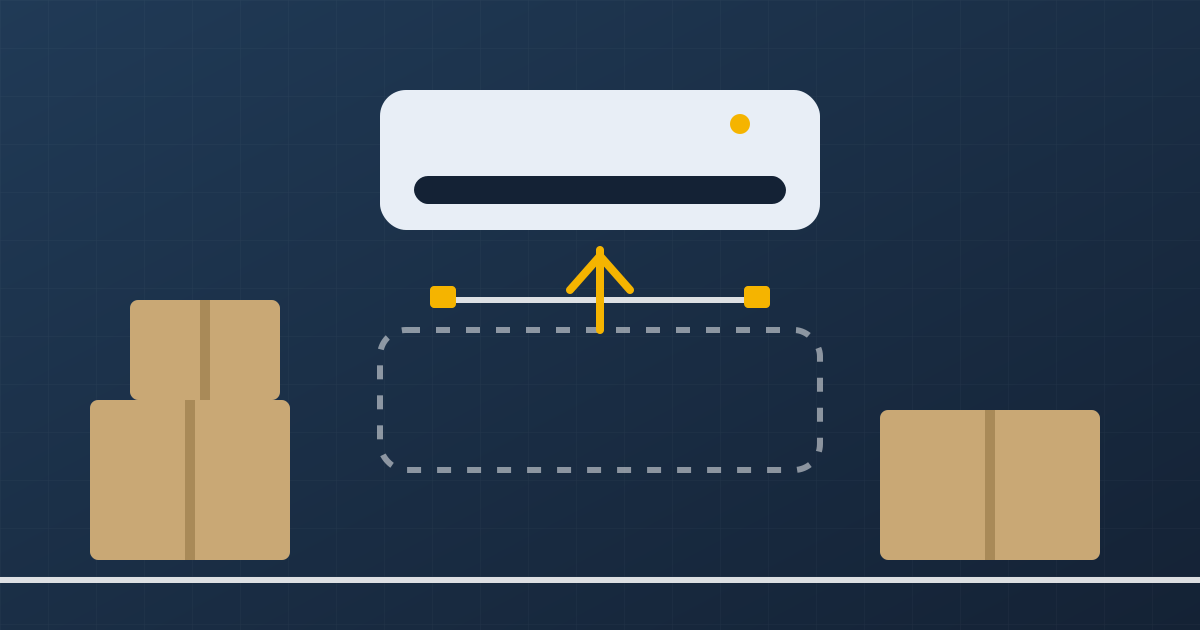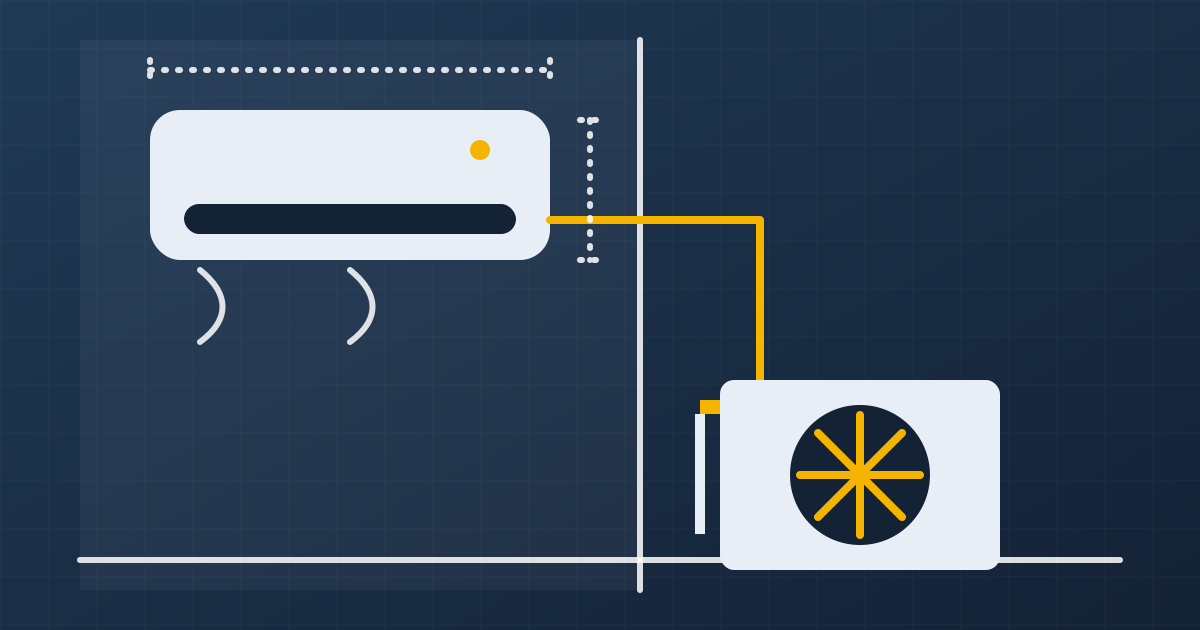
Choose the AC size for the room and its sun exposure, pick a wall for the indoor unit that lets air spread across the room, make sure the outdoor unit has a safe, ventilated spot you can reach, and confirm the room has a suitable power point and MCB for the AC. Plan the pipe and drain route before walls are painted.
Start with the room
Capacity is chosen for the room, not only the floor area. Sun on a west wall, a top-floor flat under a terrace, a kitchen next door and the number of people using the room all raise the load.
A commonly quoted rule of thumb is about 1 tonne for a small bedroom, 1.5 tonne for a medium room and 2 tonne for a large one, but it varies with the conditions above and with the model. Check the maker's guidance, or ask the shop or installer to size it for your room. An AC that is too small runs flat out and struggles. One that is too large can switch on and off too often.
Where the indoor unit goes
- High on a wall, with free space around it so the air can leave and return.
- Away from direct sun on the unit and not behind a curtain, shelf or door.
- Not directly above the bed or a desk if the airflow will blow straight onto people.
- Close to where the outdoor unit will sit, to keep the pipe run short.
The unit will also need a route for its drain water. Check where it will end.
Where the outdoor unit goes
This is where plans most often meet a problem. The outdoor unit needs fresh air around it, a solid bracket or stand and safe access for service. Think about:
- Ventilation. A boxed-in space makes the unit hot and less efficient.
- Safety. Many outdoor units sit at height. Never lean out of a window or balcony to place one. This is work for someone equipped for it.
- Building rules. In older apartment buildings in areas like Triplicane, check with your association before fixing anything to an outer wall or balcony.
- Coastal air. Near the sea, corrosion is a long-term issue. Position and protection are worth discussing.
Power supply: the part people forget
An AC is a heavy load. Plan a power point and an MCB suitable for the unit's rating, and do not run it from a shared extension board. If the room's wiring is old, ask an electrician whether it can carry the extra load before the AC is installed.
This is where an electrical check helps. Our AC installation services page covers a dedicated power point and MCB, and checking that existing wiring can carry the load. The switch and socket installation page covers the point itself.
Pipe, wiring and drain routes
The copper pipe, the cable and the drain pipe run between the indoor and outdoor units. They can be left visible or hidden in the wall or a duct.
- If you want them hidden, decide before the wall is painted or tiled.
- Keep the run as short and as direct as practical. Your AC's manual gives limits on length and height difference.
- Make sure the drain slopes downwards all the way to a suitable outlet.
Star rating, inverter and running cost
Compare the energy label on the units you are considering. Models with a higher star rating and an inverter compressor generally use less electricity for the same cooling, which matters in a city where an AC may run for most of the day in summer. Check the label rather than assuming, and weigh any higher purchase price against how many hours you expect to use it.
Timing with renovation
If the room is being renovated, tell everyone involved where the AC will go. Wiring, the false ceiling, the paint and the carpentry all depend on it. Planning the AC point and the pipe route early is cheaper than cutting into a finished wall later.
If an old AC is being replaced, the old unit needs to come down first. See our guide to AC uninstallation.
Before installation day
- Confirm the wall and the outdoor position with whoever is installing.
- Clear the area under the indoor unit and the path to the outdoor position.
- Check any permissions you need from the building association.
- Keep the manual, the warranty card and the bill together.
- Switch the AC on after installation and watch the drain and listen for odd noises.
To discuss an installation, contact us on 082483 91838, send a WhatsApp message or use the enquiry form. We confirm scope after hearing the details.
Key takeaways
- Match capacity to the room, its sun exposure and how it is used. A bigger AC is not always better.
- The indoor unit needs open airflow, and the outdoor unit needs ventilation and safe access.
- A dedicated power point and MCB for the AC are worth planning from the start.
- Hide pipes and the drain route before painting, and check apartment rules about outdoor units.
- Installation at height should be done by someone equipped for it.